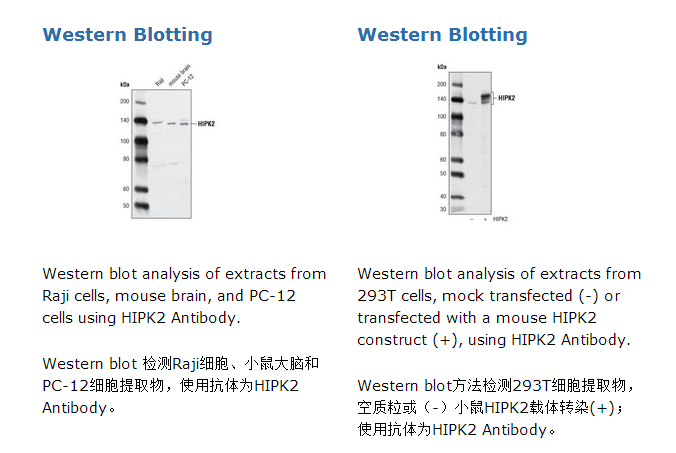
HIPK2 Antibody detects endogenous levels of total HIPK2 protein.
Source / Purification
Polyclonal antibodies are produced by immunizing animals with a synthetic peptide corresponding to residues surrounding Gln1045 of human HIPK2 protein. Antibodies were purified by protein A and peptide affinity chromatography.
Background
Members of the homeodomain-interacting protein kinase (HIPK1-4) family of serine/threonine kinases regulate gene transcription with effects on cell proliferation, differentiation, and apoptosis (1-3). HIPK1-3 are nuclear proteins that were originally described as co-repressors for homeobox transcription factors (1). HIPK proteins can interact with and/or phosphorylate many transcriptional regulators (4).HIPK2 activated in response to DNA damage, including UV radiation and chemotherapeutic drugs, phosphorylates p53 at Ser46 to promote the transcription of pro-apoptotic p53 target genes (5-7). In addition, HIPK2 interacts with a number of transcription factors that control developmental processes, tumor suppression and apoptosis (4). The kinase is regulated by both sumoylation (8) and ubiquitination (9,10). Ubiquitination and subsequent degradation of HIPK2 is inhibited by DNA damaging agents. Caspase-dependent cleavage of HIPK2 removes the inhibitory domain and results in enhanced HIPK2 activity (11).


 京公网安备11010802025653 版权所有:北京逸优科技有限公司


