描述:
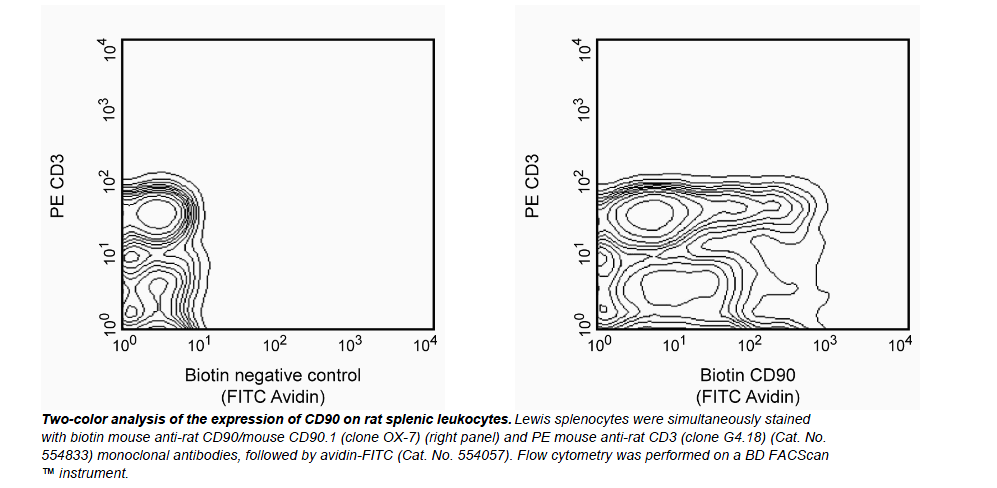
CD90 (Thy-1) isa GPI-anchored mebrane glycoprtein ofthe Igsuperfamily whic isnvoled insignal transduction. The OX-7 clone
reacts with ratCD90 reported tobe xpresd byhematopietc stem cels, early myeloid &erythroid cels, imature Blymphocytes inthe
bone marow &peripheral ymphoid organs, thymocytes, recnt hymic emigrants (asubet ofCD45RC- peripheral Tymphocytes), neurons,
glomerular mesangial cels, endothelium atinflamatory site, mast cels, and endritc els. Rat dendritc epidermal Tcels (DEC) have ben
reported tobe CD90 (Thy-1) negative, unlike those ofthe mouse.
The OX-7 clone has ben reported tocrosreact with e mouse CD90.1 (Thy-1.) aloantigen ofthe AKR/J and PL strains, but not CD90.2
(Thy-1.2) found onmany mouse trains. Inthe mouse, CD90 isfound onthymocytes, most peripheral Tymphocytes, ome intraepithelia T
lymphocytes (IEL, DEC), hematopietc stem cels, and eurons, but not Blymphocytes. Inaditon, ther isevidenc tha CD90 mediates
adhesion fmouse thymocytes omouse thymic stroma. The OX-7 clone has lo ben reported tocrosreact with rabit and guinea pig
thymus, brain, and intesine.
注意事项:
1.Since applications vary, each investigator should titrate the reagent to obtain optimal results.
2.Caution: Sodium azide yields highly toxic hydrazoic acid under acidic conditions. Dilute azide compounds in running water before
discarding to avoid accumulation of potentially explosive deposits in plumbing.
3.Store undiluted at 4°C and protected from prolonged exposure to light. Do not freeze.


 京公网安备11010802025653 版权所有:北京逸优科技有限公司


